
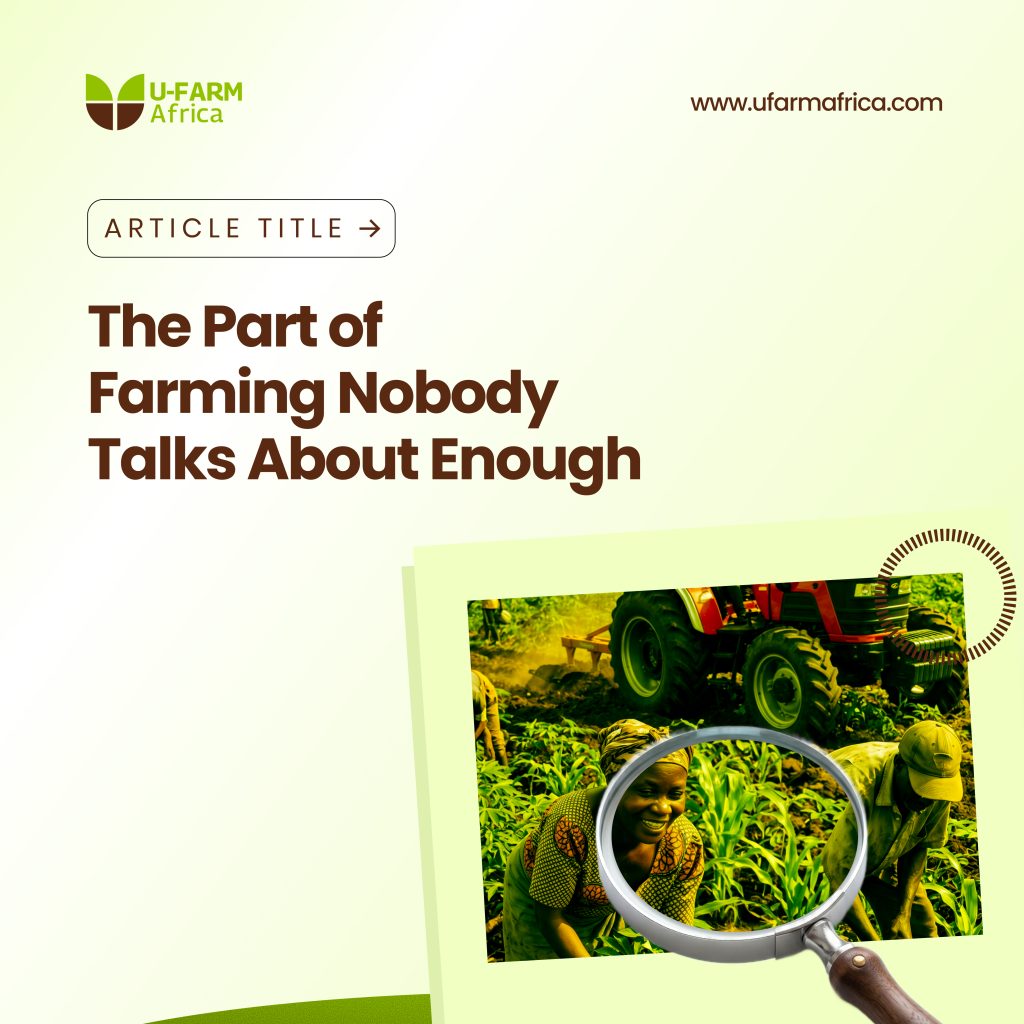
When conversations around agriculture come up, the focus is usually on land preparation, improved seedlings, fertilizer application, rainfall patterns, and harvest yields.
But one of the biggest threats to food security in Nigeria and across Africa often begins after the harvest.
According to the Food and Agriculture Organization (FAO), Sub-Saharan Africa loses billions of dollars worth of food annually due to post-harvest losses. In Nigeria alone, farmers lose a significant percentage of grains, cassava, fruits, and vegetables every year because of poor handling systems, delayed harvesting, inadequate storage, inefficient transportation, and limited access to mechanization.
For smallholder farmers, these losses are more than statistics. They are lost income, wasted labour, reduced productivity, and fewer opportunities to scale.
A maize farmer in Kaduna may spend months preparing land, planting at the right season, managing weeds, and protecting crops from pests. Harvest season finally arrives, but the grains remain exposed in the field longer than necessary because labour is unavailable or transportation is delayed. Moisture sets in. Improper handling causes spillage and grain breakage. Poor storage conditions increase the risk of pest infestation and contamination.
The farmer worked hard to produce food, yet a significant portion of the harvest may never make it to the market in good condition.
This is the part of farming nobody talks about enough.
Post-harvest losses remain one of the most overlooked challenges in African agriculture, especially among smallholder farmers who contribute a major percentage of the continent’s food production. Increasing production alone is not enough if farmers continue to lose a large share of what they already produce.
This is where mechanization becomes critical.
Mechanization is not only about tractors preparing land. It is also about improving efficiency across the agricultural value chain. Timely land preparation, mechanized harvesting, efficient threshing, faster processing, improved handling, and better transportation systems all play a major role in reducing losses after harvest.
In grain production especially, timing and handling are everything. A delayed harvest can expose crops to rainfall, pests, mould growth, and quality deterioration. Manual harvesting and processing can also increase physical losses through spillage, breakage, and contamination.
Access to mechanization helps farmers reduce these risks significantly.
For smallholder farmers, the impact goes beyond productivity. Reduced post-harvest losses mean more marketable produce, better pricing opportunities, improved income stability, and stronger food systems.
At U-Farm Africa, our work with smallholder farmers continues to reinforce one important reality: sustainable agriculture is not only about growing more food. It is also about preserving the value of every harvest.
Because every bag of grain lost after harvest represents wasted resources, lost income, and reduced food availability in a country already facing food security challenges.
The future of African agriculture will depend not only on how much we produce, but also on how much we are able to preserve.

